DOIN Digital
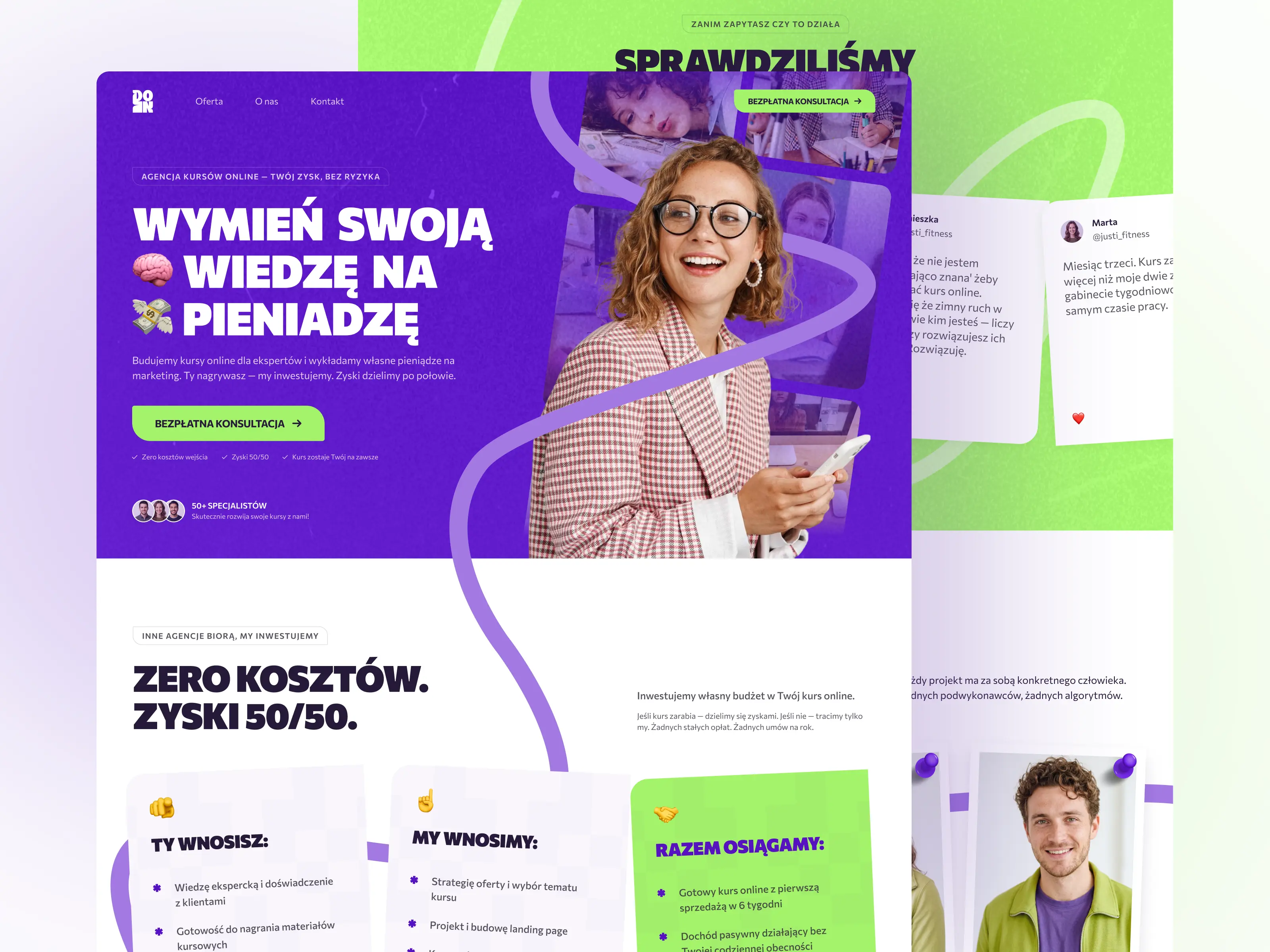
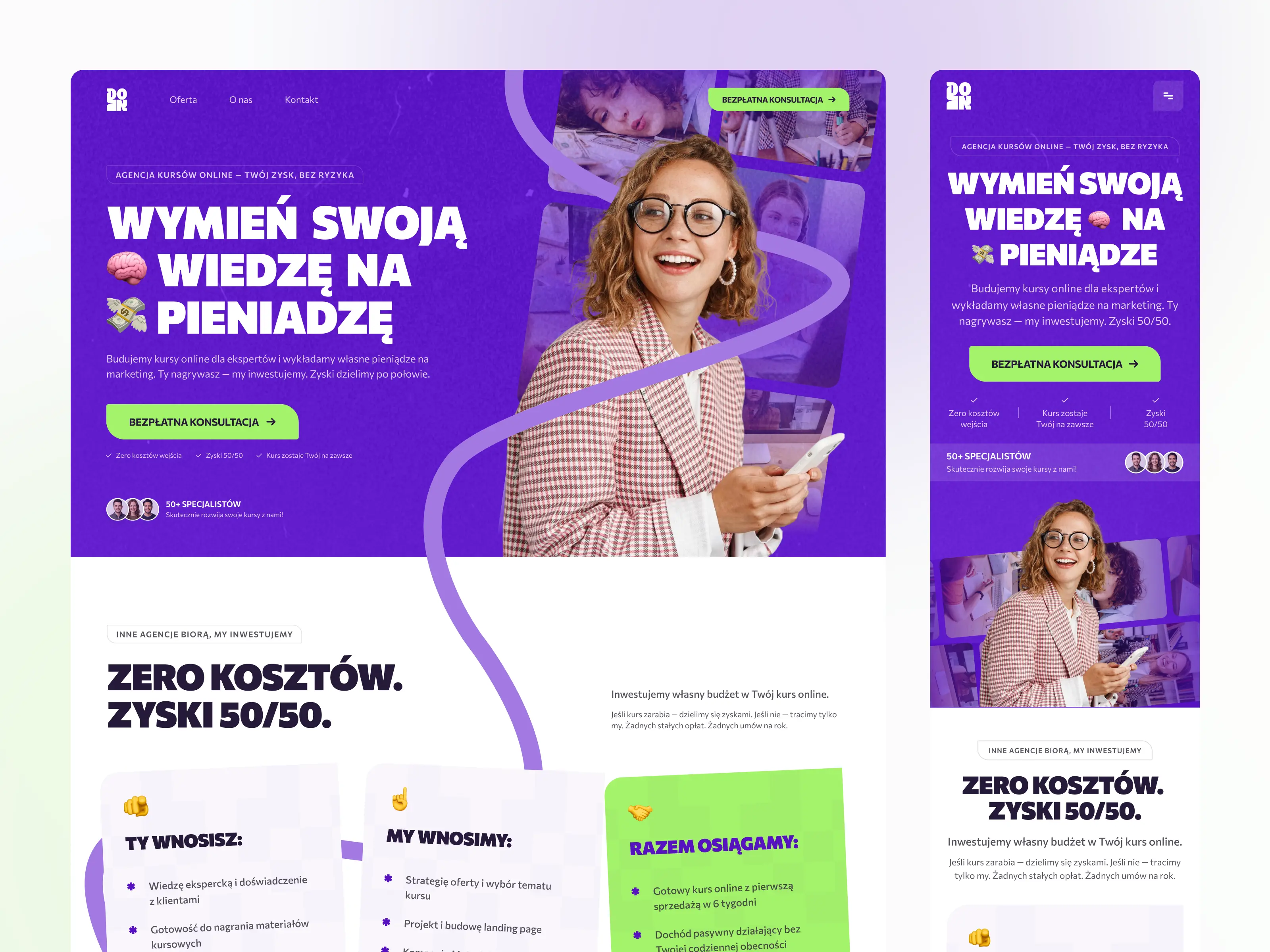
A complete brand and digital ecosystem built from the ground up — including a bold, human-first agency website, niche-specific course landing pages, and a business model for independent specialists.
web design
ux
ui
E-commerce
responsive design
prototyping
cro
landing page
business strategy
branding
social media
design critique
View Live Site
where
Poland
what
A complete brand and digital ecosystem built from the ground up
Why
To help independent specialists turn their knowledge into income — with zero risk and zero upfront cost
Role
Lead Designer
category
Online Education / Agency
When
Apr 2026 - ongoing
problem statetement
Knowledge doesn't pay the bills — unless you know how to package and sell it.
There are thousands of specialists (dietitians, trainers, physiotherapists, coaches) sitting on knowledge that could easily become a paid online course. Most of them have an engaged, loyal following - just not a large one. And that's exactly why they never start: no time, no marketing budget, no idea how to build or sell a course, and a real fear of "wasting money on ads that go nowhere."
We built DOIN Digital to remove every excuse. We do the work. We take the risk. We split the profit 50/50.
introduction
DOIN Digital is a Polish agency my three co-founders and I built from scratch. My role spans design, brand strategy, and parts of day-to-day management - I led the visual identity, the main website, and the niche-specific landing pages we design for each client's course.
This isn't a typical client project - it's our own company, which means I got to be both designer and stakeholder. That came with freedom, but also the responsibility of making sure design decisions actually served the business model we'd defined together.
introduction
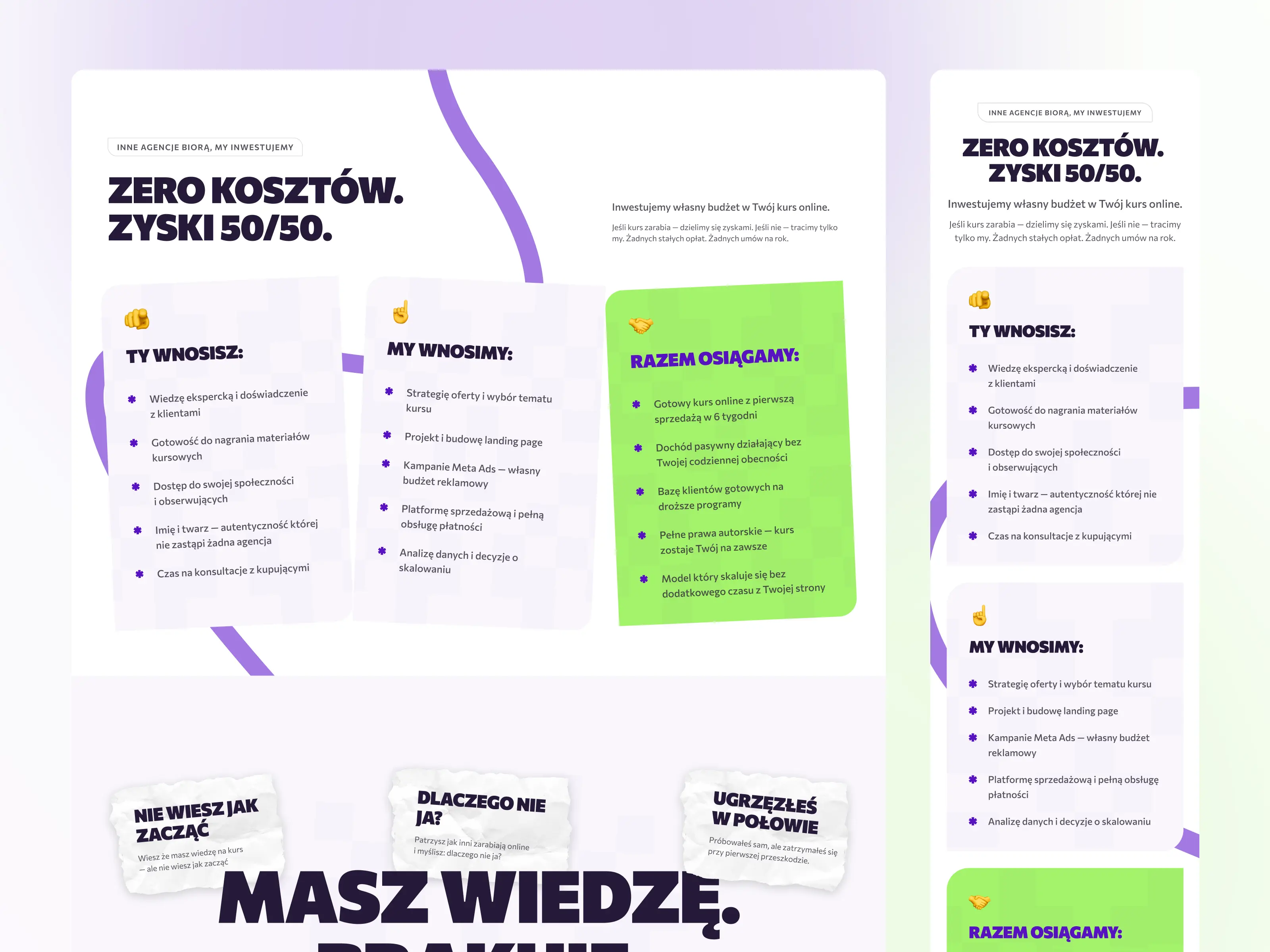
Before any visual work started, the whole team sat down to nail the model - because the design had to communicate this model clearly, fast, to skeptical specialists who've probably been burned by "marketing agencies" before.
the core offer
01
Zero cost for the influencer/specialist
02
We invest our own ad budget
03
We build the landing page, the course platform, the marketing
04
Profits split 50/50
05
The course (and full rights) stays theirs, forever
additional notes
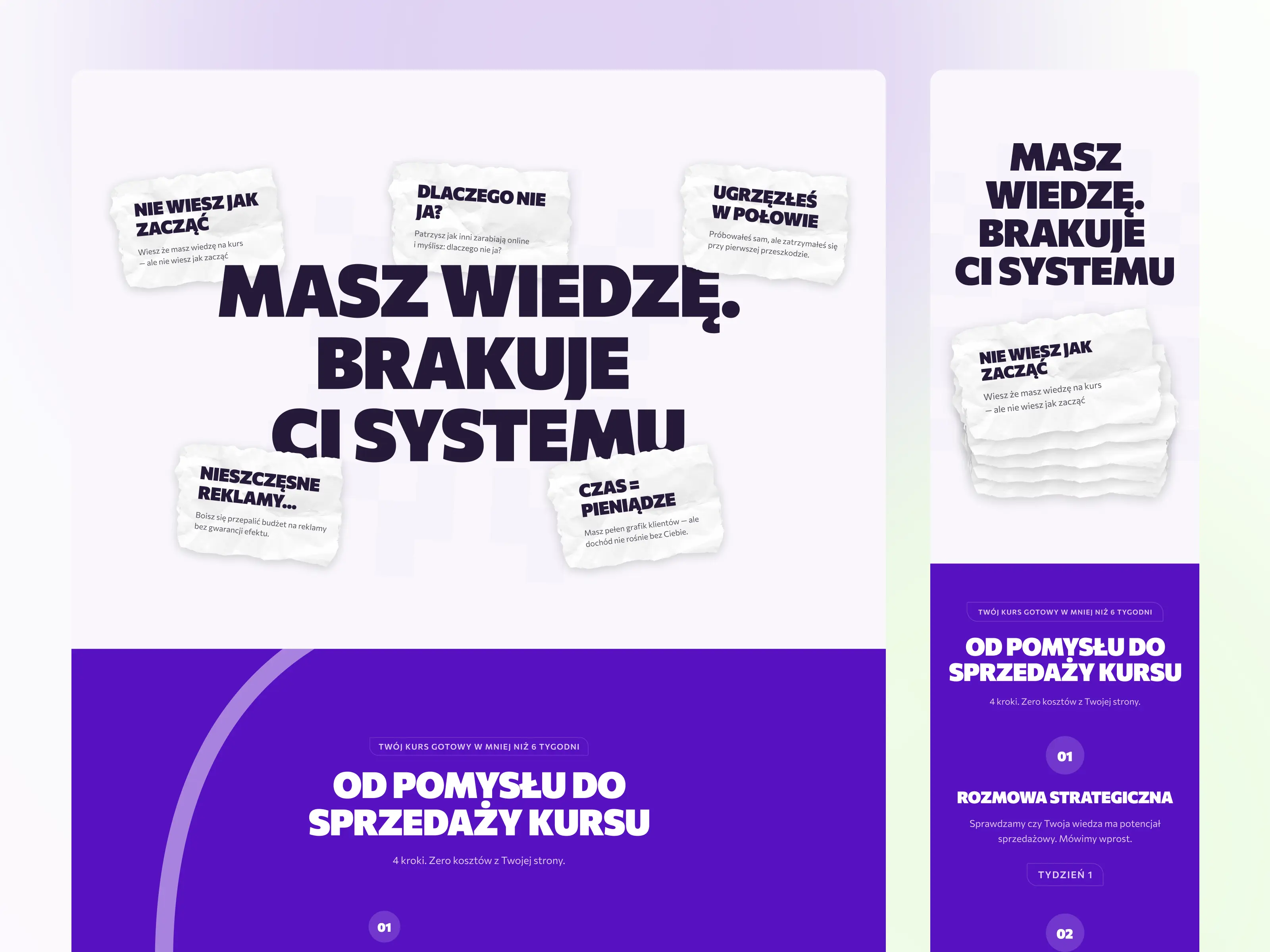
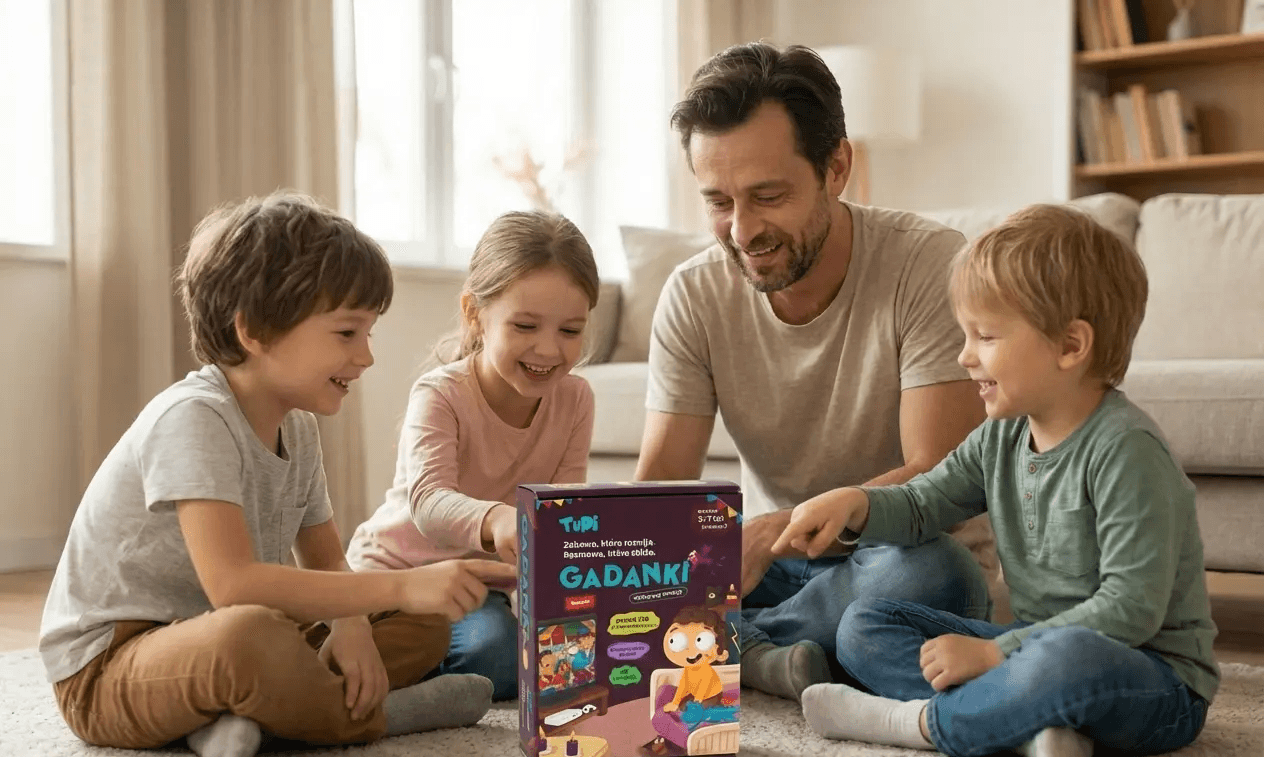
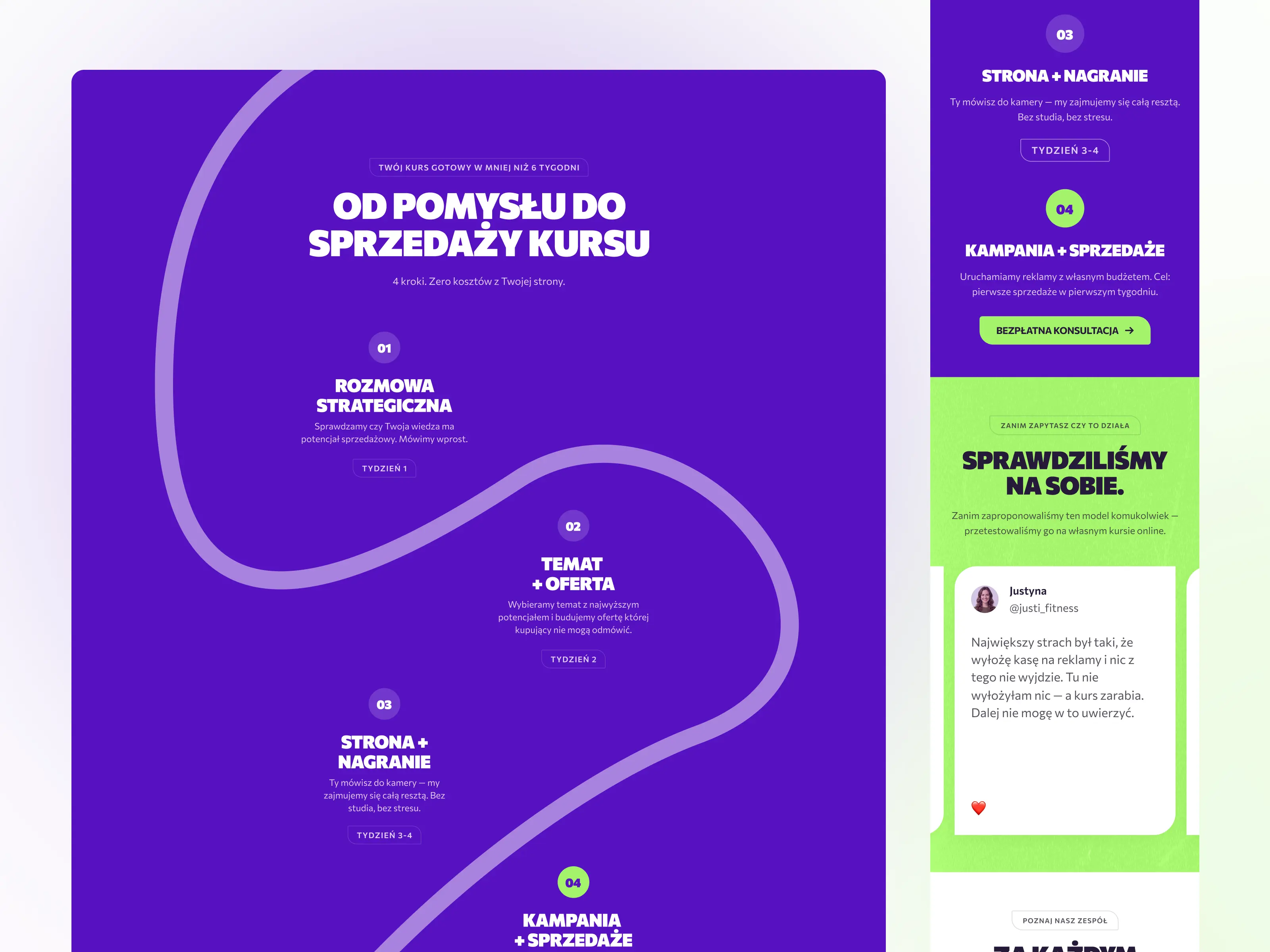
We looked at how this revenue-share model works in the Ukrainian market as inspiration, since no one in Poland is doing this exact thing - which meant less "competition," but also no template to follow. To make sure our site still felt familiar enough to navigate, I researched the structure of Polish agency websites - what sections people expect, where trust signals usually sit, how offers are typically explained - and used that as a skeleton, while making the execution completely our own.
justyna, 29, Micro-Influencer Specialist
persona 01
"I know I have something people would pay for. I just don't know where to even begin - and I don't have money to throw at ads that might not work"
01
Around 1000 followers on Instagram
02
Loyal, engaged audience - people actually comment and ask questions
03
Has genuinely useful knowledge ("how to fix your posture in 6 weeks" type content)
04
Has thought about "making a course" for two years, never started
goals
Extra income without quitting her day job. Building a "name" for herself online.
frustrations
No time, no tech skills, fear of failure, fear of looking like a scammer to her own audience.
introduction
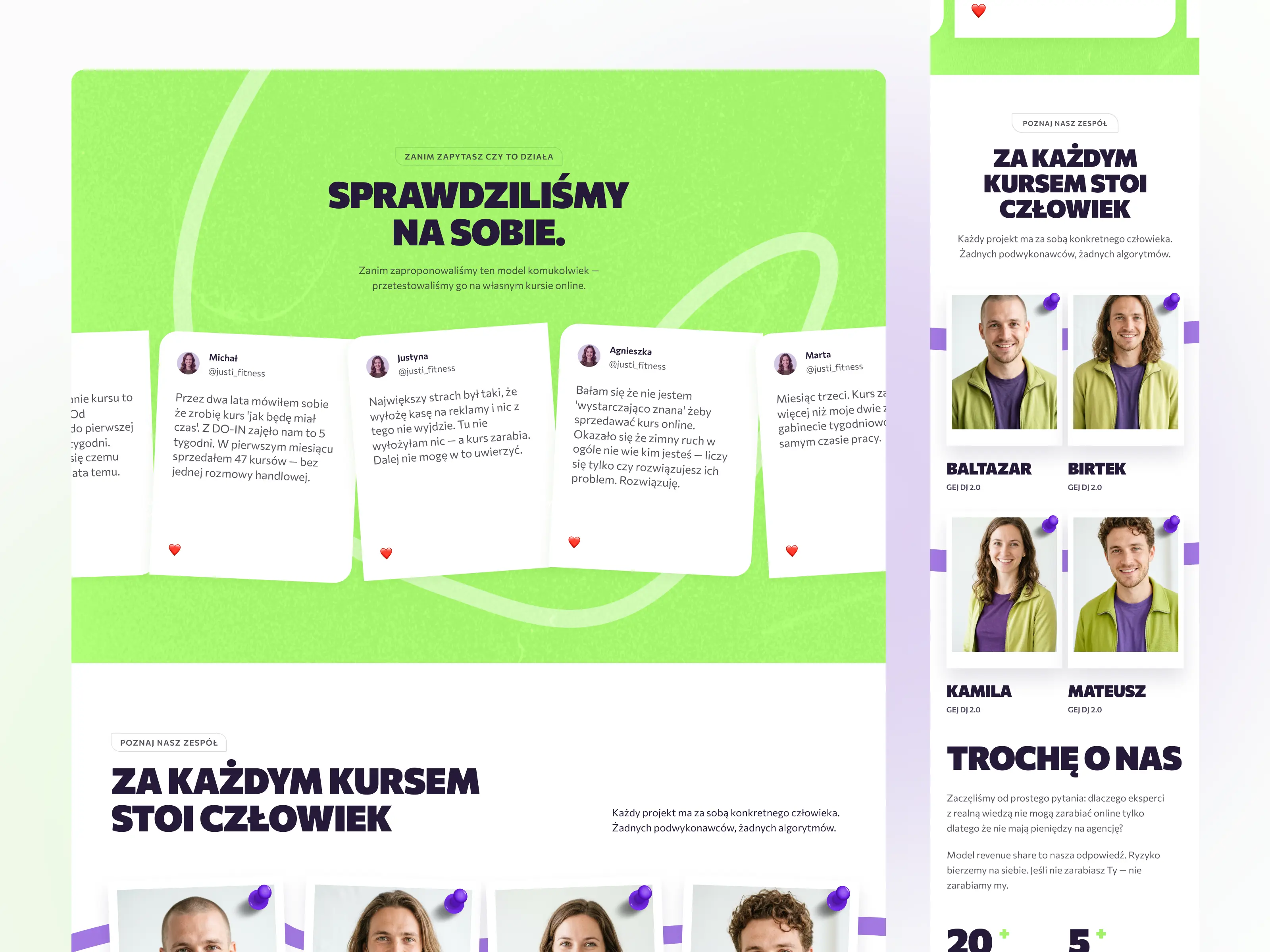
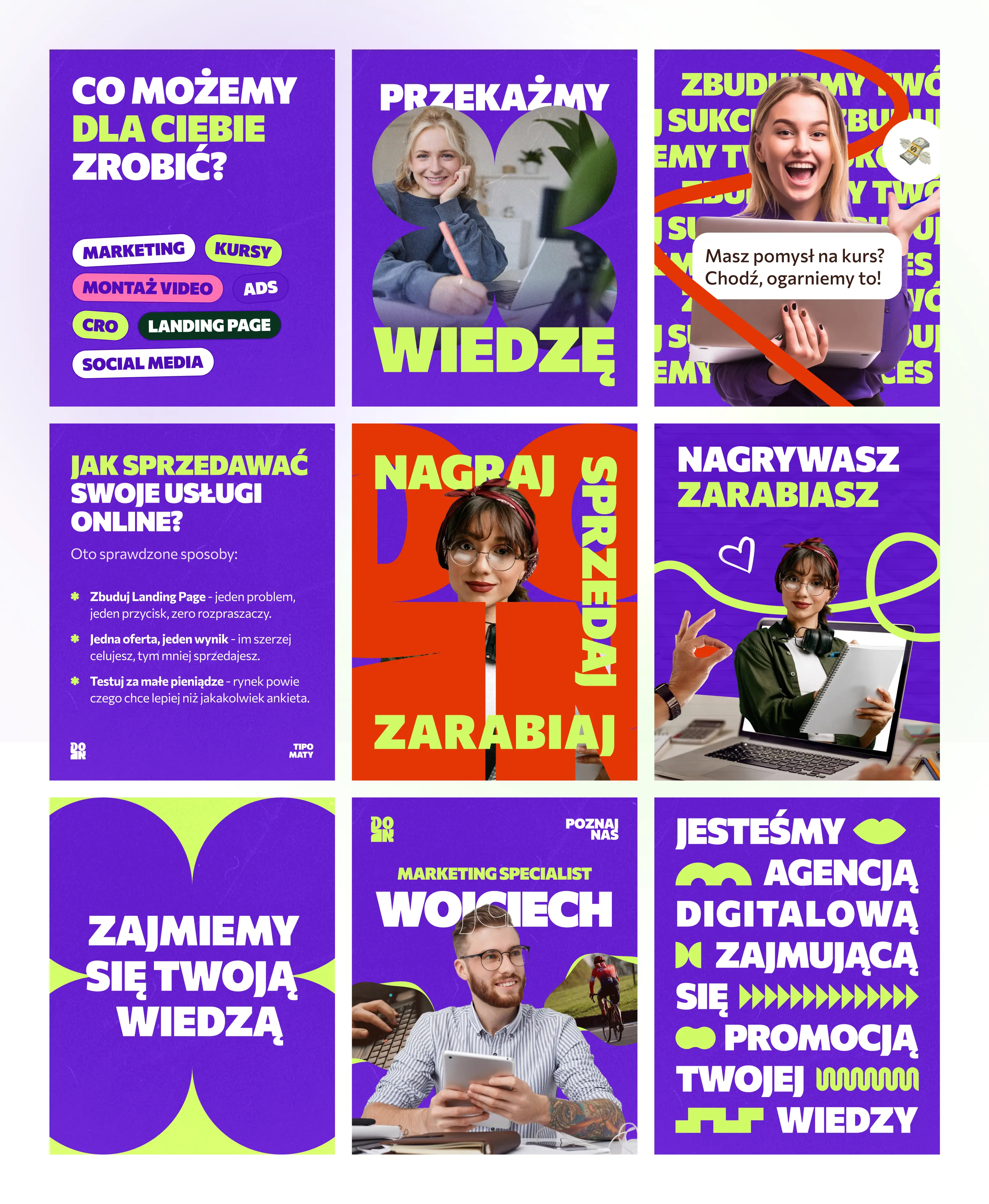
Right now, the internet is flooded with websites that all look the same — safe gradients, generic stock photography, predictable layouts. To a specialist who's already skeptical of agencies, a website like that screams "template" and "no one's actually behind this."
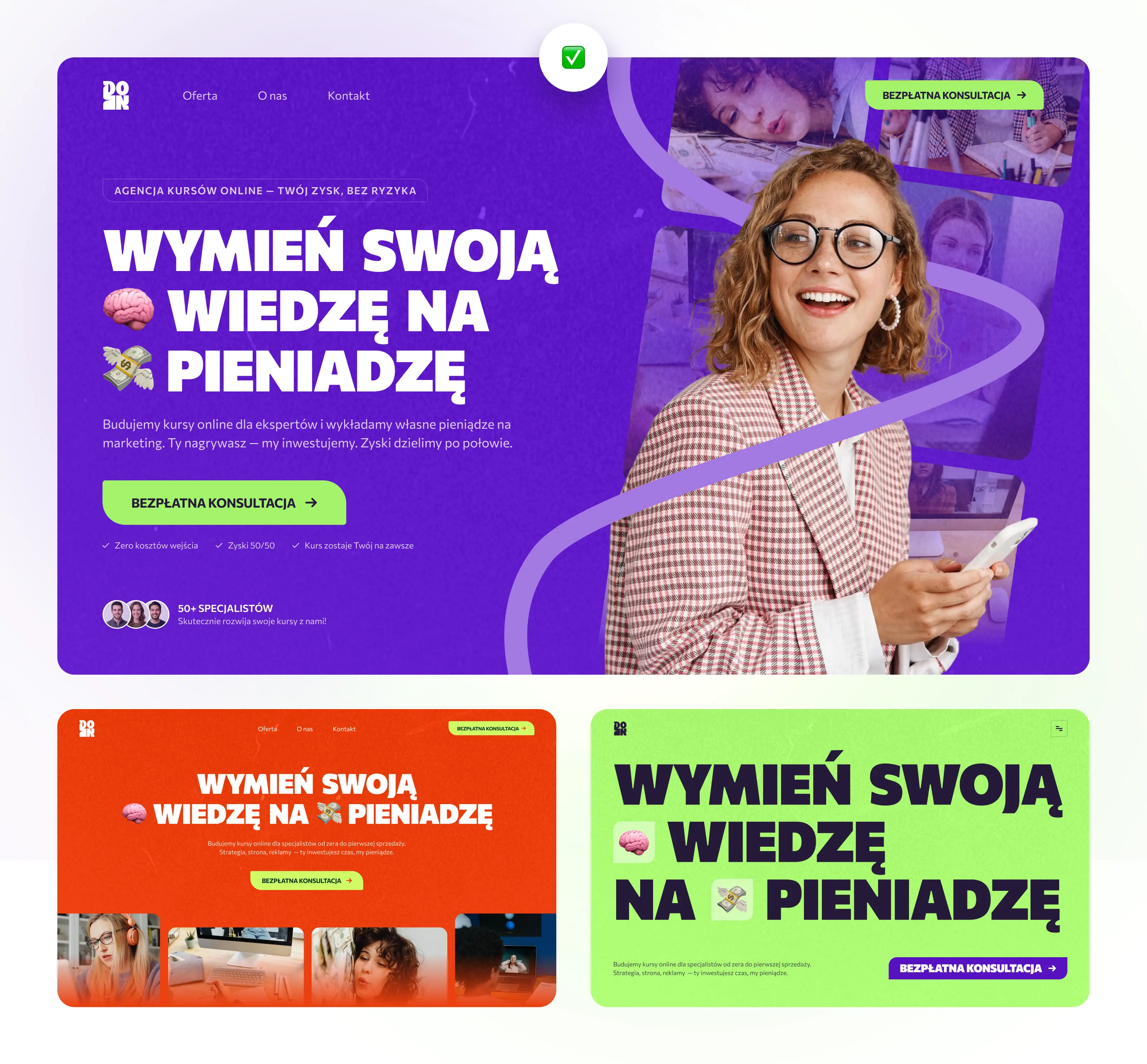
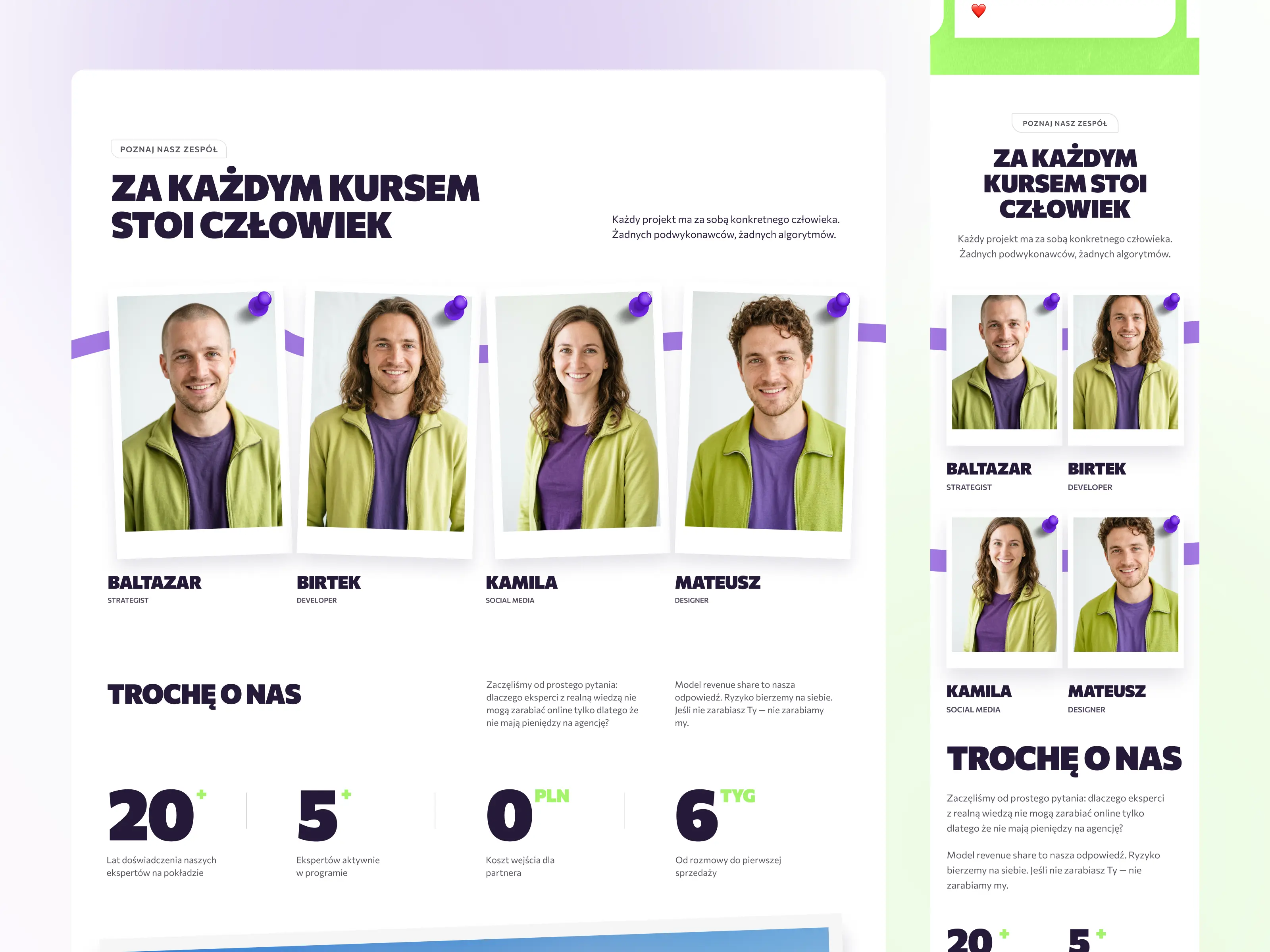
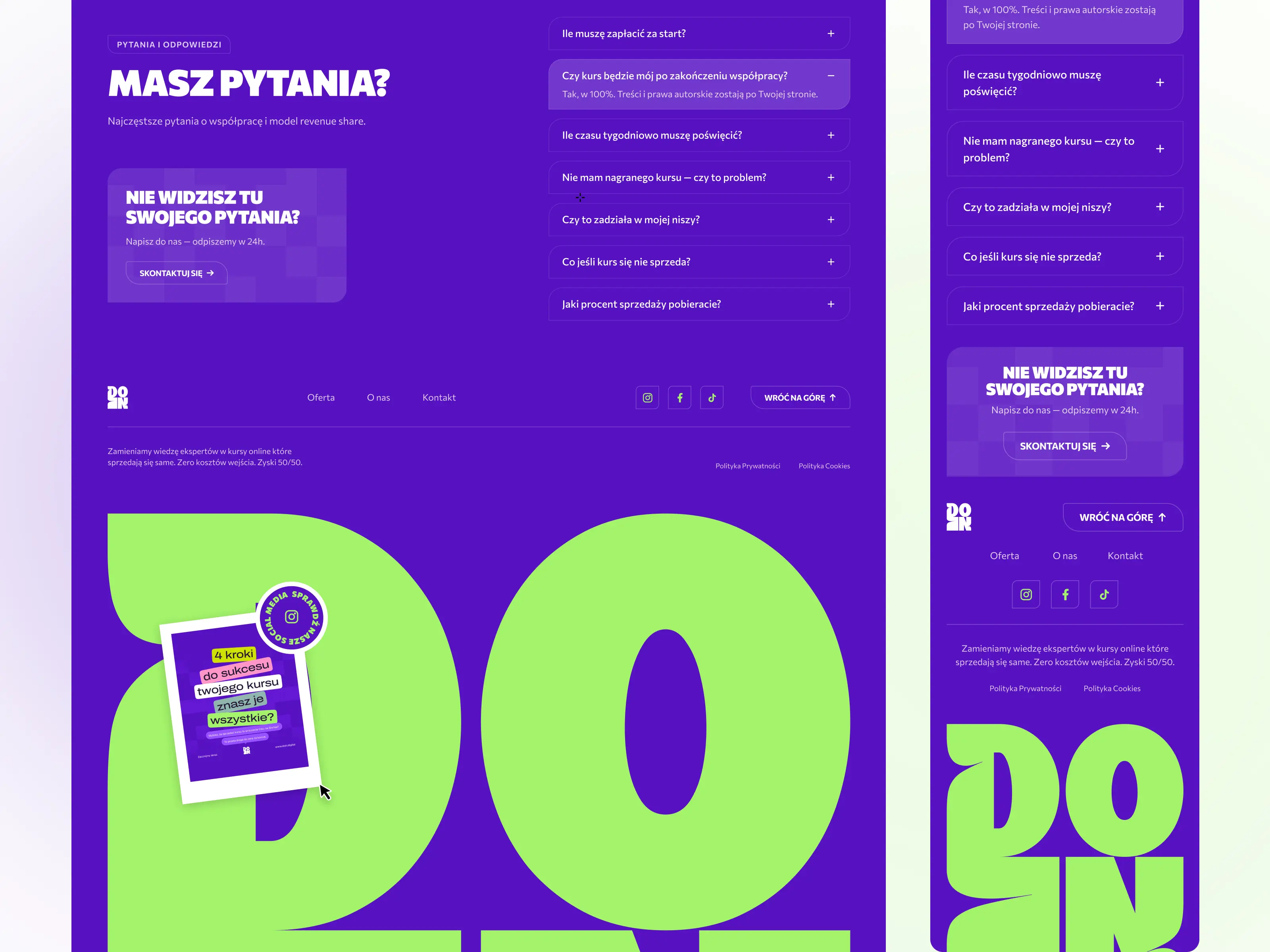
We made the opposite bet: playful, warm, slightly chaotic-on-purpose, full of personality. Sticky-note textures, hand-placed photos with pins, oversized type, bold color blocking (deep purple + electric lime green). The message: real humans built this, real humans run this, and real humans will work on your course.
Exploring Directions
I designed 3 distinct visual directions, each with multiple internal variations - ranging from cleaner/corporate-adjacent to fully maximalist. We ran these through internal design critique sessions, listing pros and cons of each:
01
Direction A — too close to "typical agency," didn't stand out
02
Direction B — interesting typography but felt cold, lacked warmth
03
Direction C (winner) — bold, colorful, playful, immediately readable as "made by people, not a template"
description
Designing for your own company is a different beast than designing for a client - there's no brief to fall back on, and every decision is a decision about your own business, not someone else's. The hardest part wasn't the visuals - it was making sure four co-founders with four opinions converged on one direction without losing the "soul" we all agreed mattered most.
If there's one thing I'd do differently next time: start corridor testing earlier. We caught the "too static" problem relatively late, and while the fix wasn't painful, an earlier round would have saved a re-pass on spacing across the whole site.
View more of my work
Discover